
Jaw surgery with braces in Chiang Mai
When the position of the jaws causes the bite problem, braces alone may not be enough. Kitcha Dental Clinic offers orthognathic (corrective jaw) surgery for patients who have their orthodontic treatment with us: our orthodontists plan it with a maxillofacial surgery consultant, and the surgery takes place in a hospital.
- Open every day, 09:00–20:00
- Opposite Chiang Mai Gate
- Coordinators in English and Thai
Is this you?
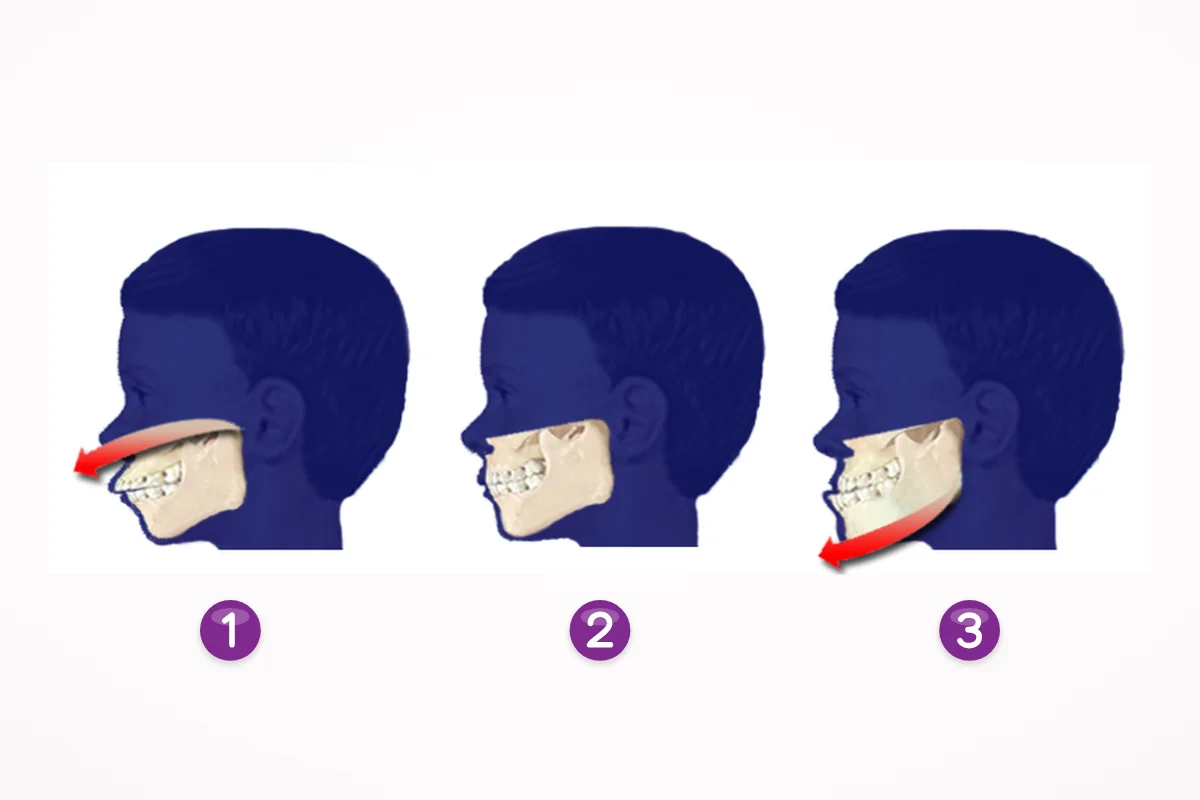
- Your lower jaw sits well forward or well back compared with your upper jaw.
- Your front teeth do not meet when you bite, or your face looks uneven.
- An orthodontist has told you that braces alone cannot fully correct your bite.
Jaw surgery is a major treatment. Your orthodontist first explains whether braces alone, or braces with surgery, suit your case.
Would you like to know which braces suit you?
Book an orthodontic consultation. Your orthodontist examines your teeth and bite and explains the options, the likely treatment time and the fee before you decide.
How treatment is staged
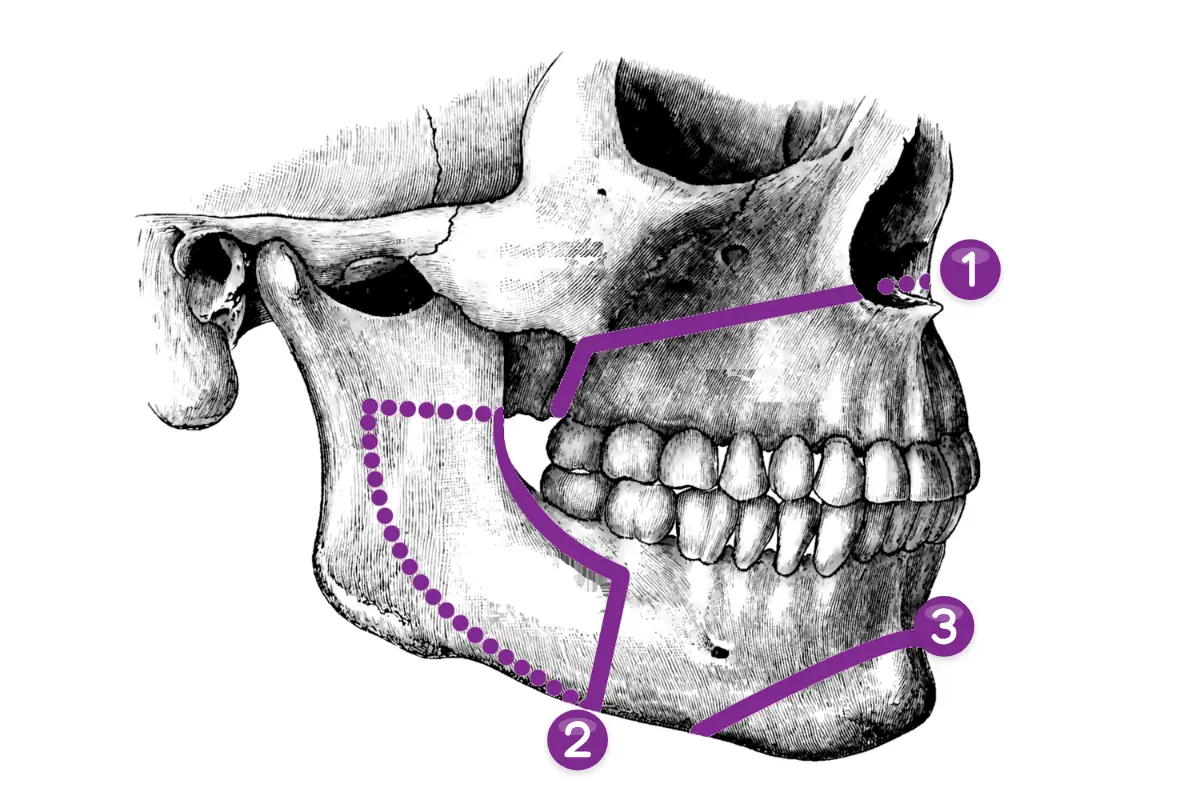
Records and planning
Panoramic and cephalometric X-rays and a study model or scan are taken. If surgery is chosen, a 3D CT scan is used to plan the case with the maxillofacial surgery consultant.
Braces before surgery
Braces line up the teeth in each jaw so they will fit together once the jaws are moved.
Surgery in hospital
The surgery is done in a hospital under general anesthesia, after a health check. Any hospital stay is part of the hospital admission.
Braces after surgery and retainers
After recovery, braces or aligners finish the bite at the clinic, and retainers keep the result.
Where the surgery takes place
The surgery itself takes place in a hospital. Kitcha Dental Clinic provides the assessment, the orthodontic treatment before and after surgery, and the coordination with the surgical team. Like any major operation under general anesthesia, it carries risks such as swelling, bleeding, infection and reactions to anesthesia, which the surgeon explains before you decide.
Cost of treatment
Treatment has two parts: the orthodontic fee, paid to the clinic, and the surgical and hospital fees, paid to the hospital. Your orthodontist explains both parts once the plan is agreed.
Prices on our prices page are shown as ranges. Your final fee depends on what the examination finds, and may include additional items — such as a rubber dam or special materials — when your treatment needs them. Your dentist explains these before treatment.
Who treats you
Every orthodontic case at the clinic is treated by an orthodontist, a dentist with postgraduate training in orthodontics. When treatment also involves gums, restorations or jaw surgery, the dentists involved plan it together.
Jaw surgery FAQs
Can I have jaw surgery at the clinic without braces?
No. Jaw surgery is offered as part of orthodontic treatment with us, because the teeth need to be aligned before and after the jaws are moved.
Where is the surgery done?
In a hospital, under general anesthesia. The clinic provides the assessment, the orthodontic treatment and the coordination.
How long does the whole treatment take?
It usually takes longer than braces alone, because there is orthodontic treatment before and after surgery, plus recovery. Your orthodontist gives you an estimate once the plan is agreed.
Is jaw surgery risky?
Like any major operation under general anesthesia, it carries risks such as swelling, bleeding, infection and reactions to anesthesia. A health check is done beforehand, and the surgeon explains the risks for your case.
How much does it cost?
There are two parts: the orthodontic fee, paid to the clinic, and the surgical and hospital fees, paid to the hospital. Your orthodontist explains both once the plan is agreed.
Do I need to wear a retainer after braces?
Yes. Teeth tend to move back after treatment, so a removable or fixed retainer is made when the braces come off. Wear it as your orthodontist instructs, and bring it to your check-ups.
Book an orthodontic consultation
Tell us what you would like to change about your teeth or bite, and send a photo of your smile if you like. A coordinator replies in English or Thai and books a time with an orthodontist. Open every day, 09:00–20:00 (Thailand time).
Or email us at [email protected]
Content reviewed by Dr. Pawak Tungthangthum — DDS, Chiang Mai University; Master's Degree in Esthetic Restorative and Implant Dentistry (International Program), Chulalongkorn University · Last reviewed