
Orthodontics and braces in Chiang Mai
Orthodontic treatment straightens teeth and corrects how they meet when you bite. At Kitcha Dental Clinic, orthodontists plan treatment with metal, ceramic or Damon braces, or Invisalign clear aligners, and the clinic is Invisalign Certified.
- Open every day, 09:00–20:00
- Opposite Chiang Mai Gate
- Coordinators in English and Thai
Is this you?
- Your teeth are crowded, crooked or have gaps between them.
- Your upper and lower teeth do not meet properly, such as an overbite, an underbite or a crossbite.
- You would like straighter teeth with an option that is less visible than metal braces.
- Your child's teeth or jaws seem to be growing out of line.
Orthodontic treatment is not only about appearance; it also aims to correct how the teeth meet when you bite. Your orthodontist explains whether treatment is needed after an examination and X-rays.
Your options
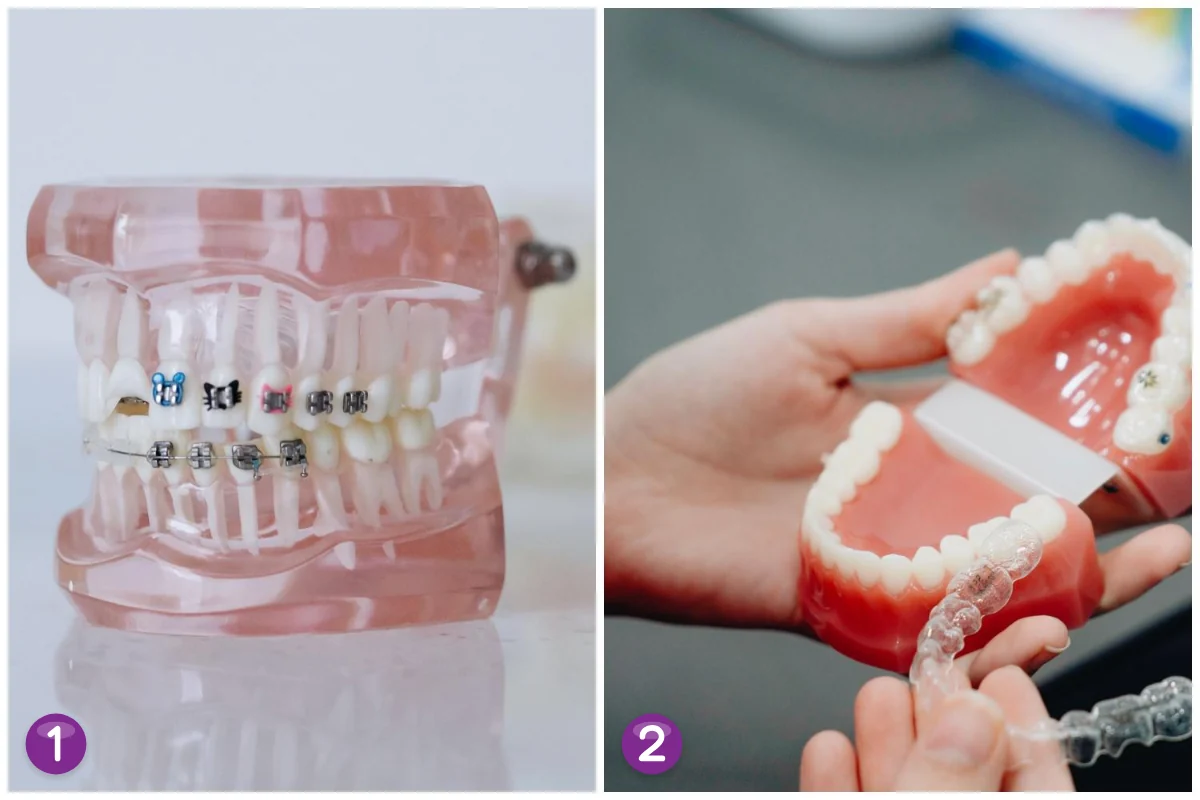
Metal braces
Metal brackets on the teeth, joined by a wire. The standard fixed braces.
Clear (ceramic) braces
Tooth-colored ceramic brackets that work like metal braces but are less visible.
Damon self-ligating braces
Brackets with a built-in clip that holds the wire, so no elastic rings are needed.
Invisalign clear aligners
A series of removable clear trays, planned digitally before treatment starts.
Retainers
Removable or fixed retainers keep the teeth in their new position after treatment.
Your orthodontist explains which option suits your bite, your daily routine and how visible you would like the braces to be.
Braces for children and adults
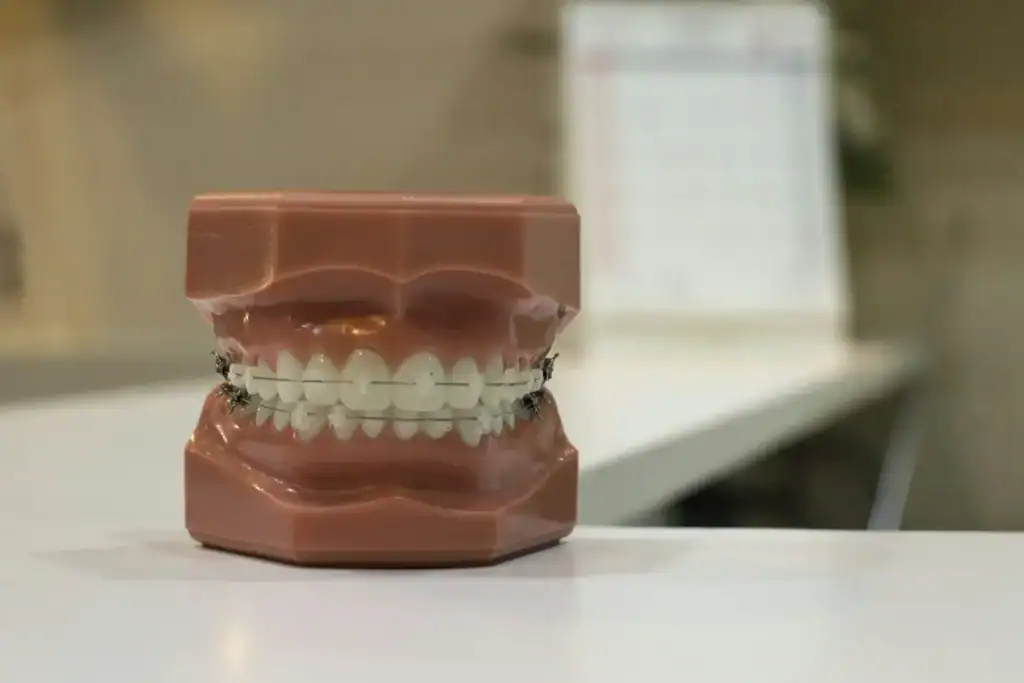
Braces are often started once most of the adult teeth have come through. For some children, early (interceptive) treatment, such as a 2×4 appliance or a palatal expander, can guide the teeth and jaws while they are still growing.
There is no upper age limit for braces, and many of our orthodontic patients are adults. Because adults are no longer growing, some bite problems are corrected differently, and your orthodontist explains what is possible in your case.
When braces need jaw surgery
When the position of the jaws themselves causes the bite problem, braces alone may not be enough. For patients who have their orthodontic treatment with us, orthognathic (corrective jaw) surgery can be included in one treatment plan: our orthodontists plan the case with a maxillofacial surgery consultant, the surgery takes place in a hospital, and the orthodontic treatment before and after surgery is done at the clinic.
Would you like to know which braces suit you?
Book an orthodontic consultation. Your orthodontist examines your teeth and bite and explains the options, the likely treatment time and the fee before you decide.
What happens, and how many visits
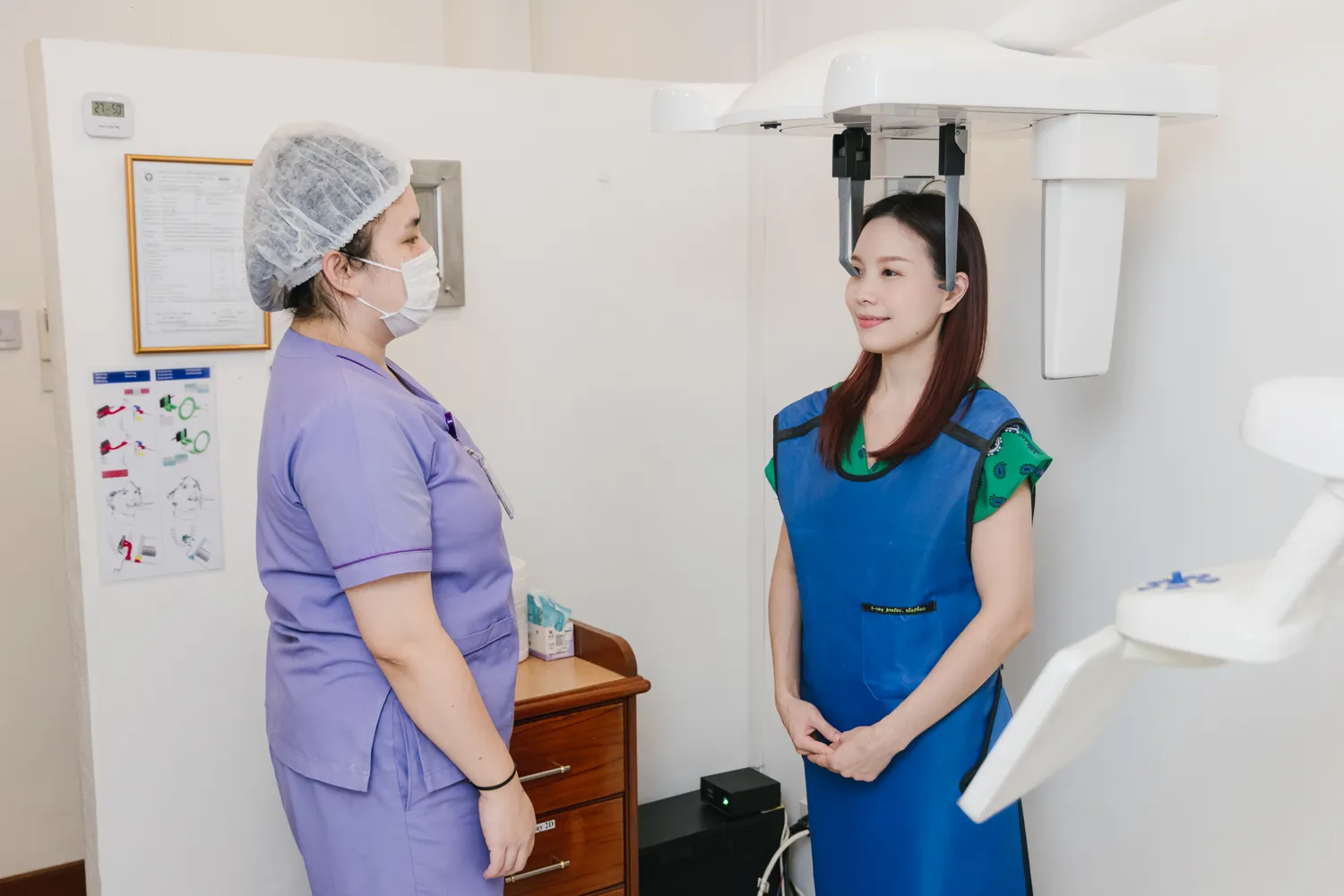
Consultation and records
Your orthodontist examines your teeth and bite and takes panoramic and cephalometric X-rays and a digital scan or study model to plan treatment.
Treatment before braces
Any cleaning, fillings or extractions that your plan needs are done first.
Fitting the braces or aligners
Your orthodontist fits the brackets and wire, or gives you your first clear aligners.
Regular adjustment visits
With braces, you come back about every 4–6 weeks; with Invisalign, about every 6–8 weeks. Your orthodontist checks progress and adjusts the treatment.
Finishing and retainers
The braces are removed, final X-rays are taken, and retainers are made to keep the teeth in place. Wear them as your orthodontist instructs.
Treatment time depends on your bite and usually ranges from about 6 months to two years. Your orthodontist gives you an estimate before you start. Because braces need regular visits, tell us if you live outside Chiang Mai so the visits can be planned.
If radiation worries you: at our clinic, X-rays inside the mouth are digital, taken with phosphor plates and sensors that help lower the dose compared with film. Our Planmeca ProMax CBCT has an Ultra Low Dose mode, your dentist chooses the mode that suits each case, and X-rays are taken only when they are needed.
Cost of orthodontic treatment
Orthodontic fees are per case and depend on the type of braces or aligners and how complex your bite is. Price ranges are on our prices page, and your orthodontist confirms the fee for your case at the consultation.
Prices on our prices page are shown as ranges. Your final fee depends on what the examination finds, and may include additional items — such as a rubber dam or special materials — when your treatment needs them. Your dentist explains these before treatment.
Who treats you
Every orthodontic case at the clinic is treated by an orthodontist, a dentist with postgraduate training in orthodontics. When treatment also involves gums, restorations or jaw surgery, the dentists involved plan it together.
Orthodontists
- Dr. Panurat LimpasirisuwanMSc in Orthodontics, Prince of Songkla University; Diplomate, Thai Board of Orthodontics
- Dr. Tanawan WanitwisutchaiOrthodontic training, Mahidol University; Diplomate, Thai Board of Orthodontics
- Dr. Thananon LaokuldilokMSc in Orthodontics, Khon Kaen University
Orthodontic FAQs
How long does orthodontic treatment take?
It depends on how complex your bite is and on the type of braces or aligners, and usually ranges from about 6 months to two years. Your orthodontist gives you an estimate before treatment starts.
Am I too old for braces?
There is no upper age limit, and many of our orthodontic patients are adults. Your gums and teeth are checked first, and any gum treatment or fillings are done before the braces go on. Many adults choose clear braces or Invisalign because they are less visible.
Which braces are the least visible?
Invisalign clear aligners and clear (ceramic) braces are the least visible options we offer. Your orthodontist explains which suits your bite, as some tooth movements are planned differently with aligners and with braces.
How often do I need to come in?
With braces, about every 4–6 weeks for an adjustment; with Invisalign, about every 6–8 weeks for a check and your next aligners. If you live outside Chiang Mai, ask us before you start so the visits can be planned.
How much do braces cost?
Fees are per case and depend on the type of braces or aligners and how complex your bite is. Price ranges are on our prices page, and your orthodontist confirms the fee for your case at the consultation.
Do I need to wear a retainer after braces?
Yes. Teeth tend to move back after treatment, so a removable or fixed retainer is made when the braces come off. Wear it as your orthodontist instructs, and bring it to your check-ups.
Can jaw surgery be part of my orthodontic treatment?
Yes, for patients who have their orthodontic treatment with us. Our orthodontists plan the case with a maxillofacial surgery consultant, the surgery takes place in a hospital, and the braces before and after surgery are done at the clinic.
Book an orthodontic consultation
Tell us what you would like to change about your teeth or bite, and send a photo of your smile if you like. A coordinator replies in English or Thai and books a time with an orthodontist. Open every day, 09:00–20:00 (Thailand time).
Or email us at [email protected]
Content reviewed by Dr. Pawak Tungthangthum — DDS, Chiang Mai University; Master's Degree in Esthetic Restorative and Implant Dentistry (International Program), Chulalongkorn University · Last reviewed