

You may have been told that braces alone cannot fully fix your bite, and that jaw surgery is part of the plan. The questions come quickly. How many steps are there? Why do I need braces before the operation? How long will I be off work, what can I eat, and how many years will the whole thing take?
The reassuring part is that this treatment follows a clear, well-known order: records and planning, braces before surgery, the operation in hospital, recovery, braces after surgery, and retainers. Hospital information leaflets describe the same order, and a systematic review found that jaw surgery has a positive effect on quality of life, including eating, speaking and confidence in the face.
This guide walks through each stage in order, with the time each stage usually takes according to hospital leaflets and research, why the bite can look worse before surgery, what the first six weeks feel like, Thai soft food ideas, the risks explained calmly, and who does what in the care team.
In short: jaw surgery with braces usually runs in five stages. Braces before surgery often take about 12 to 24 months, the operation is done in hospital under general anesthesia with a stay of about one to three days, soft food is needed for about six weeks, and braces stay on for about 3 to 12 months after surgery before retainers. In total, many patients take about two to three years. The actual time depends on each case, and your dentist plans it with you.
This article focuses on the steps and timeline of jaw surgery with braces. If you are comparing clear aligners and fixed braces, or wondering how long to wear retainers, these related articles go deeper.
Clear aligners or braces for adults: how orthodontists decide
Retainers after braces: how long to wear them
Who needs jaw surgery with braces?
Braces move teeth, but they cannot change the size or position of the jaw bones themselves. When the upper and lower jaws are too far apart, too small, too large or tilted, the teeth may still not meet properly however well they are lined up. A Thai dental faculty radio talk lists the common examples below, and orthodontists use X-rays and measurements to tell a jaw problem from a tooth problem.
| What you may see in the mirror or when you bite | What the team often considers |
|---|---|
| The lower jaw sits well in front of the upper jaw, so the front teeth cannot bite into food | Whether the lower jaw is too large, the upper jaw too small, or both |
| The lower jaw is small, so the lower front teeth sit far behind the upper ones | Moving the lower jaw forward, and checking whether breathing during sleep is affected |
| A very gummy smile from the upper jaw | Whether the upper jaw is the main cause, or the lips and gums |
| The chin and jaw are clearly off to one side | Which jaw is tilted, and whether one or both jaws need moving |
| The back teeth meet but the front teeth stay apart when you bite | Whether the cause is the shape of the jaws or the position of the teeth |
Jaw surgery can be done on the upper jaw, the lower jaw or both, sometimes with a chin procedure at the same time. Choosing one jaw or two is a joint decision between the orthodontist and the surgeon, based on which part is the true cause.
Self-check: which group are you closer to?
- Teeth crowded or gapped, but the jaws look in line and the front teeth can bite: braces alone are often considered first.
- A mild jaw difference that does not bother you: braces alone may be enough, depending on the X-rays.
- The lower or upper jaw sits clearly forward or back, the face is uneven, or the front teeth cannot meet: ask whether braces with jaw surgery suit you.
- Still growing in your early or mid teens: the team usually follows your growth first.
Jaw surgery is a major treatment, and the choice is always yours. Your orthodontist first explains whether braces alone, or braces with surgery, suit your case.
The five stages and how long each takes
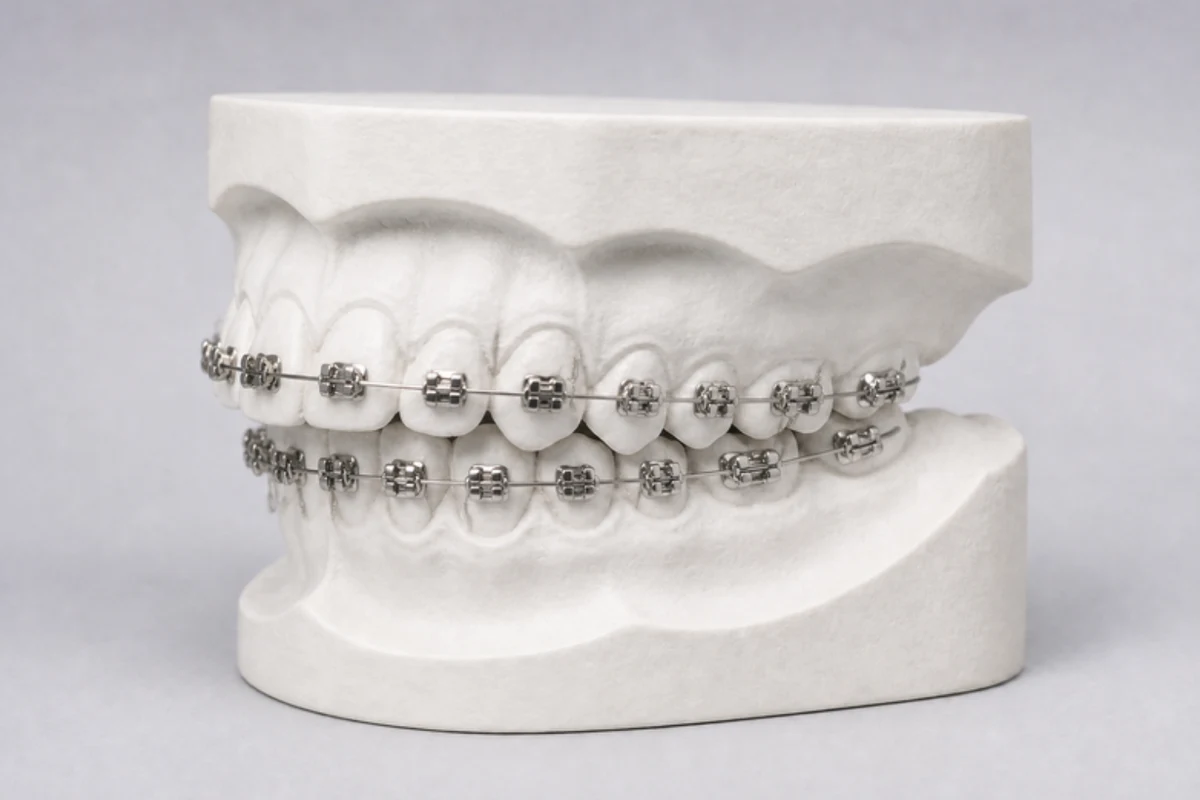
The times below are the ranges that hospital leaflets and studies give. They are not a promise for any one person: the actual time depends on your bite, whether teeth need to be removed, how fast your teeth move and how you heal. Your dentist plans the timing of your own case with you.
| Treatment stage | Typical time (varies by case) | Main job of this stage |
|---|---|---|
| 1. Records and planning | Number of visits depends on the case | Find the true cause and agree on a plan |
| 2. Braces before surgery | Often 12 to 24 months | Line up the teeth over each jaw so they fit once the jaws move |
| 3. Surgery in hospital | Several hours of surgery, about 1 to 3 days in hospital | Move the jaws into the planned position and fix them |
| 4. Recovery | Back to daily life in about 2 to 6 weeks, soft food for about 6 weeks | Let swelling settle and the bone heal |
| 5. Braces after surgery, then retainers | Often 3 to 12 months of braces, then retainers for the long term | Fine-tune the bite and keep the result |
A study of 65 patients found that braces before surgery took a median of 17 months, ranging from 7 to 47 months, and the authors advise telling patients to expect 12 to 24 months. UK hospital leaflets describe braces for about 18 to 24 months before surgery and for about 3 to 12 months after it, and expect braces to be worn for at least two years in total. Overall, published guides describe the whole treatment as taking about two to three years.
Records and 3D planning
Good planning is what makes the later stages smooth. In general, planning starts with an examination of the teeth, bite and face, X-rays such as a panoramic view and a cephalometric view, and a scan or model of the teeth. When surgery is part of the plan, a 3D scan of the jaws is commonly used so the orthodontist and the surgeon can plan together. Which records you need depends on your case.
- Photos of your face and teeth help compare the start and the end of treatment.
- The cephalometric X-ray shows how the jaws sit in relation to the skull, so the team can measure how far each jaw needs to move.
- A 3D scan lets the surgeon test the movement on the computer before the operation.
- Your concerns and goals matter as much as the X-rays. Telling your dentist what bothers you helps shape the plan.
Computer planning is now widely used. A systematic review of 12 clinical studies found that, on average, the jaw position after surgery was within about 2 mm of the virtual plan, and that the most common imaging for this was a 3D scan of the jaws combined with a scan of the teeth. Some hospital teams also hold a joint visit with the orthodontist and the surgeon, then give you time to think before you decide.
Questions that help you understand your own plan
You do not need to learn every technical term. Asking about the things that help you understand your own plan is enough, for example:
- Do my teeth and jaw bones suit braces alone, or braces with surgery, and why?
- Do I need teeth or wisdom teeth removed first, and does that change the length of treatment?
- What other options are there for me, and how do they differ?
- Do my health conditions or the medicines I take affect the plan?
- While I wait for surgery with braces on, how should I look after my teeth?
- After surgery, how do I care for my mouth, what can I eat and when can I go back to work?
- About how many visits will I need, and how should I plan my travel? Your dentist gives this information for your case.
- After treatment ends, how do I look after the result over the long term?
Orthodontics and braces in Chiang Mai
Braces before surgery, and why the bite can look worse first
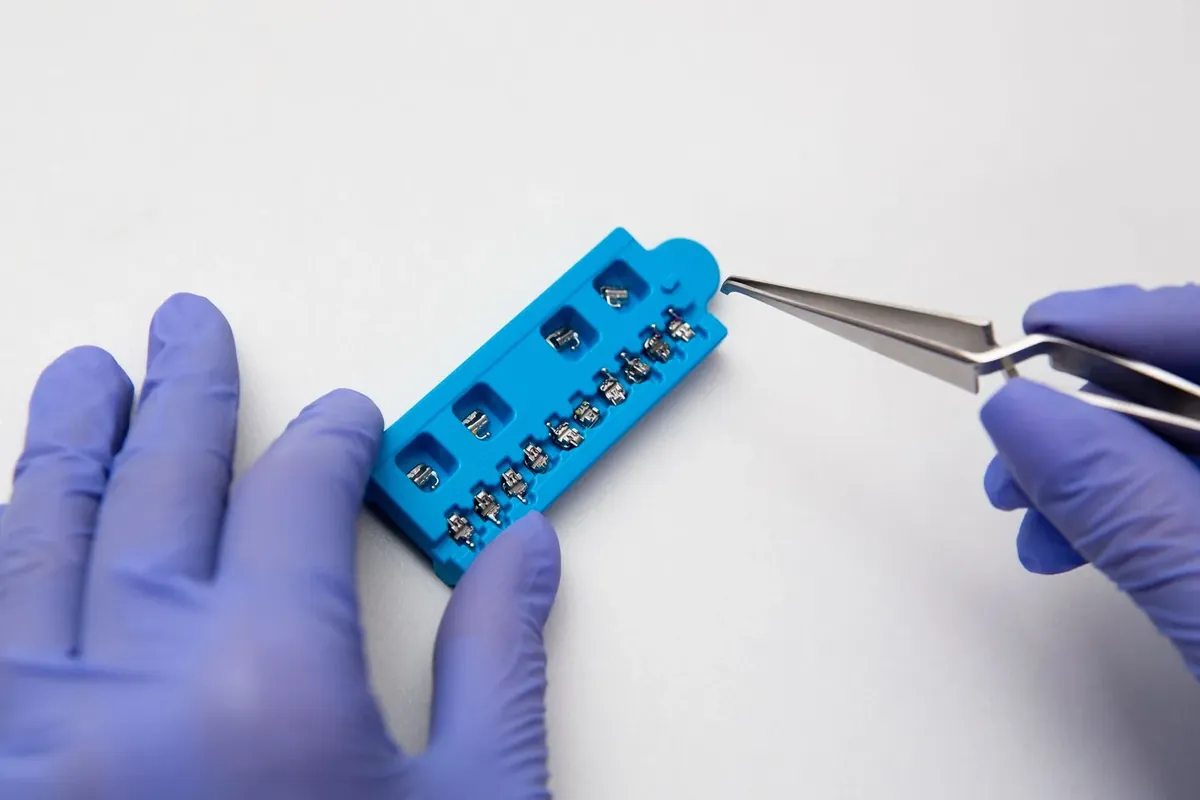
Braces line up the teeth in each jaw so they will fit together once the jaws are moved. Surgery without braces is not the usual plan, because after the jaws move, the cusps of the upper and lower teeth need to slot into each other for chewing to work well.
Why the bite can look worse before it gets better
Over the years, teeth tilt to make up for a jaw that is out of line. Lower front teeth lean back over a large lower jaw, and upper front teeth lean forward. Before surgery, the orthodontist moves these teeth back to their natural angle over the bone. This is called decompensation. For a while, the gap between the front teeth gets bigger, so the bite looks worse. It is planned and temporary, and it is what allows the surgeon to move the jaws the full distance.
Research on decompensation shows why this step matters: when the teeth are not fully moved back before surgery, the jaws cannot be corrected as fully. Tell your orthodontist if the change worries you. Understanding the reason for each step often helps.
What else happens before surgery
- Some teeth may need to be removed to make space, and poorly placed wisdom teeth are sometimes removed in a separate operation before the jaw surgery.
- Braces need regular adjustment visits. How often depends on the appliance and your case, and your dentist plans this with you.
- Close to the operation, new records are taken to check the plan, and small attachments may be added to the braces to help during surgery.
- The hospital arranges a health check before surgery.
Some centers offer a surgery-first approach, where the operation comes before most of the braces. A systematic review of 11 studies found that all reported a shorter total treatment time, but all had a significant risk of bias, so the evidence is not yet strong. Whether it suits you is a question for your orthodontist and surgeon.
Surgery day in hospital
The surgery is done in a hospital under general anesthesia, after a health check. Kitcha Dental Clinic coordinates the care with the surgical team. The hospital explains the admission details, such as when to stop eating and what to bring.
- Most of the work is done from inside the mouth, through the gums, so there are usually no scars on the face.
- The bone is cut in a controlled way, moved to the planned position and held with small titanium plates and screws, which are usually left in place.
- The operation takes several hours. A US hospital guide says up to about four to six hours, depending on the type of surgery.
- Hospital stays in published guides are about one to three days.
- You can usually open your mouth soon after surgery. Wiring the jaws together is rare today; light elastic bands on the braces guide the new bite instead.
- Dissolving stitches close the gums and usually fall out in about one to two weeks.
Recovery week by week
Recovery is a gradual climb. Each hospital gives its own instructions, which always come first. The table below brings together what UK hospital leaflets describe, so you can picture the weeks ahead.
| Time after surgery | What is usually normal | What helps |
|---|---|---|
| First 2 days | Swelling builds up for about 48 hours. Feeling sleepy, a sore throat and tingling or numb lips are common. | Rest with your head raised on extra pillows, use cold packs as advised, sip fluids often and take the medicines the hospital prescribes. |
| Days 3 to 10 | Swelling starts to go down, and most of it has gone by about day 10. Bruising may show on the cheeks or neck. After upper jaw surgery, the nose may feel blocked or bleed a little for one to two weeks. | Walk a little each day, keep up liquid or very soft food, brush gently with a small soft brush and change the elastics as shown. |
| Weeks 2 to 6 | Energy comes back. Many people return to work or study after about 2 to 6 weeks, depending on the job and the surgery. Feeling low for a couple of weeks is common and passes. | Move from liquid to soft food step by step, keep the braces and teeth very clean, and go to every follow-up visit. |
| About 6 weeks to 3 months | Most people eat a fairly normal diet from about 6 weeks. The jaw bones are mostly healed after about 2 to 3 months. | Avoid very hard or chewy food and contact sports for at least 3 months. |
| 3 months and beyond | Small amounts of swelling can take several months to fade. Braces continue to fine-tune the bite. | Keep your orthodontic visits and your routine dental check-ups. |
Pain is different for each person. Some find the first days mainly uncomfortable rather than painful, and pain relief is given in hospital and for home. A US hospital guide notes that initial healing takes about six weeks, and that the jaw may take about a year to heal completely.
What to eat after jaw surgery
For the first days, most people manage fluids only, then move slowly to soft food. A review of 58 centers worldwide found that the most common plan was a liquid diet for 2 to 4 weeks, followed by soft food for 2 to 6 weeks. In one hospital group of 135 patients, weight dropped by about 4 kg on average by week 4, and on average patients were back to their weight before surgery after about 4 months.
- Liquid stage: smooth rice soup blended thin, soy milk, milk, clear soups, fruit smoothies without seeds.
- Soft stage: rice porridge, steamed egg, soft tofu, fish cooked until soft, mashed pumpkin or potato.
- Later: soft noodles and soft rice dishes, before slowly returning to normal food from about 6 weeks.
- Keep very hard, crunchy or chewy food, such as nuts, crisp pork skin and tough meat, for after 3 months.
- Eat small meals often, and rinse or brush after each meal as the surgical team advises.
Braces after surgery and retainers
The bite is not perfect straight after surgery, and that is expected. In the weeks that follow, elastic bands on the braces guide the teeth into place. After recovery, braces continue to fine-tune the bite, and retainers keep the result.
Hospital leaflets describe this phase as lasting about 3 to 12 months. When the braces come off, retainers hold the teeth while they settle: often a removable retainer on top and a thin fixed wire behind the lower front teeth, with night-time wear over the long term. Your orthodontist tells you which retainer and how often to wear it.
Retainers after braces: how long to wear them
Risks to know, explained calmly
Jaw surgery is a well-established operation, and careful planning keeps risks low. Like any major operation under general anesthesia, it carries risks such as swelling, bleeding, infection and reactions to anesthesia. The surgeon explains the risks that apply to your own surgery before you decide.
Numbness of the lip and chin
The nerve that gives feeling to the lower lip and chin runs through the lower jaw, so numbness or tingling after lower jaw surgery is very common at first. It affects feeling only, not the movement of the lips or face. For most people feeling returns over weeks to months. Studies and hospital leaflets report a lasting change in a smaller group: a systematic review found about 13 to 18 in 100 still had some change at one year, and hospital leaflets give figures between about 5 and 15 in 100, usually over a small area.
Other points the surgeon may discuss
- Swelling that takes months to fully fade, and nose stuffiness after upper jaw surgery.
- Opening the mouth less widely for a while, and jaw pain.
- A small chance that the bite shifts back over time, which depends on the type of movement. Braces after surgery and retainers help keep the result.
- Rarely, a second small operation to adjust a plate or screw.
- Gum or tooth problems if cleaning around the braces is hard. Good daily cleaning and regular dental check-ups help.
When to contact the team after surgery
Most of what you feel in the first weeks is part of normal healing. The hospital gives you a contact number when you go home. Contact the surgical team calmly but promptly if you notice any of the following, and let the clinic know so the care can be coordinated.
- Bleeding from the mouth or nose that keeps going or worries you.
- Pain that the prescribed medicine does not control.
- Swelling that grows again after it had started to go down, or a fever.
- Feeling sick for days, or trouble drinking enough.
- Trouble breathing: seek urgent care straight away.
For a loose bracket, a broken wire or questions about the elastics, contact the clinic and your orthodontist will help.
Who does what in the care team
Jaw surgery with braces is teamwork. In general, the orthodontist looks after the teeth and the braces, the oral and maxillofacial surgeon performs the operation, and the two plan the jaw movement together.
| Team member | What they do | Where it happens |
|---|---|---|
| The orthodontist | Assessment, records, braces before and after surgery, retainers | At the dental clinic |
| Oral and maxillofacial surgeon | Plans the jaw movement with the orthodontist, performs the surgery and follows up the healing | Joint planning, then surgery in hospital |
| Hospital team | Health check, anesthesia, care during the hospital stay | In hospital |
| You | Clean the teeth and braces, wear elastics and retainers, keep appointments | At home |
For patients of Kitcha Dental Clinic, jaw surgery takes place in hospital, and the clinic coordinates the care with the surgical team. How the steps are arranged depends on each case, and your dentist plans them with you.
Myths and facts about jaw surgery
| Myth | Fact |
|---|---|
| Jaw surgery is mainly cosmetic surgery. | Its main aims are a better bite, easier eating and speaking, and a balanced face. The appearance changes too, and the team shows you the expected change before surgery. |
| After surgery, braces are no longer needed. | Braces before and after surgery are what make the teeth meet properly in the new jaw position. |
| If my bite looks worse during braces, something has gone wrong. | Before surgery, moving the teeth back over the bone often makes the bite look worse for a while. It is planned. |
| My jaws will be wired shut for weeks. | Plates and screws hold the bone, so most people can open the mouth soon after surgery. Wiring is rare. |
| There will be big scars on my face. | Most of the surgery is done from inside the mouth. |
| A few days after surgery I can eat normally. | Soft food is needed for about six weeks, and very hard food waits for about three months. |
If this is you: the next step that fits
These are example situations, not patient stories, to help you find the next step that fits.
- Your chin sits well forward and your lower front teeth close in front of the upper ones: book an orthodontic consultation. X-rays show whether braces alone or braces with jaw surgery suit you.
- You were told years ago that you need jaw surgery, but you are still unsure: talk it through with an orthodontist again, using the questions in the planning section as a guide, and take time to decide. A plan you understand makes the long treatment easier.
- You are in your early teens and your jaw looks out of line: the orthodontist usually follows growth first, since most jaw growth finishes in the late teens.
- Your teeth are crooked but your jaws are in line: braces or clear aligners alone may be enough. See our article comparing the two for adults.
- You live outside Chiang Mai or abroad: let the clinic know early so the plan can take your work and travel into account. The number of visits depends on the case. If spoken English is hard to follow, explanations can be repeated or sent in writing by email or WhatsApp.
- Numbness or the hospital stay worries you: share these worries with your dentist and the surgeon before you decide, so they can explain what usually happens in your type of surgery. Knowing the usual course helps you decide calmly.
Clear aligners or braces for adults: how orthodontists decide
The usual order of care, step by step
- Examination and discussion: the dentist checks your teeth, bite and face and listens to your concerns.
- Records: X-rays, photos and a scan or model of the teeth, as your case needs.
- Options explained: whether braces alone or braces with surgery suit you, and the likely length of treatment.
- If surgery is chosen: joint planning between the orthodontist and the oral and maxillofacial surgeon, often with 3D images of the jaws.
- Braces before surgery, with regular adjustment visits.
- Surgery in hospital after a health check, with the clinic coordinating the care.
- Braces after recovery to finish the bite, then retainers to keep the result.
The number of visits and the length of each stage depend on each case, and your dentist plans them with you.
If radiation worries you: X-rays inside the mouth at the clinic are digital, and the CBCT has an ultra low dose mode. Your dentist chooses the mode that suits each case, and X-rays are taken only when they are needed.
The cost has two parts
Jaw surgery with braces has two parts: the orthodontic part, and the surgical part, which takes place in hospital. The surgical part depends on the type of operation and the hospital, so the total differs from person to person.
The orthodontic part depends on the type of appliance and the length of treatment. See the orthodontic section of the prices page.
Frequently asked questions about jaw surgery steps
Can braces alone fix it instead of surgery?
For a mild jaw difference, braces alone can sometimes hide it by tilting the teeth, which is called orthodontic camouflage. Research on underbites shows that people chosen for surgery usually had a larger jaw difference, and that surgery changes the jaw bases more. Braces cannot change the size or position of the bone. Your orthodontist explains which applies to you after the X-rays.
Can I have the surgery without braces?
Usually not. Without braces, the teeth may not lock together after the jaws move. Even in a surgery-first plan, braces are still needed after the operation.
At what age can jaw surgery be done?
Surgeons usually wait until the jaws have stopped growing. A UK hospital leaflet notes that most growth is complete by about age 18, and surgery is normally considered from the late teens.
Will there be scars, and do the plates come out?
Most jaw surgery is done from inside the mouth, so scars on the face are uncommon. The small plates and screws are usually left in place for good and are only removed if they cause a problem.
Will the numbness go away?
For most people, feeling comes back gradually over weeks to months. A smaller group keeps a slight change in feeling, usually over a small area of the lip or chin. It does not affect how the lips move.
How long will I be off work or study?
Hospital leaflets give about 2 to 6 weeks, depending on the surgery and your work. Heavy physical work may need longer, and contact sports wait for at least three months.
Can clear aligners be used instead of fixed braces?
Whether clear aligners can be used for any part of the treatment depends on your case and the surgical plan. Your dentist explains the options that suit you.
How long does the whole treatment take?
Many patients take about two to three years from the first braces to the retainers. Braces before surgery often take 12 to 24 months and braces after surgery 3 to 12 months. The actual time depends on each case, and your dentist plans it with you.
Summary
Jaw surgery with braces is a long but well-mapped path. Knowing the stages and the usual time for each makes it much easier to plan your life around it.
- Surgery is considered when the jaw bones, not only the teeth, cause the bite problem.
- Five stages: planning, braces before surgery, surgery in hospital, recovery, braces after surgery and retainers.
- A bite that looks worse before surgery is a planned step.
- Expect soft food for about six weeks and about 2 to 6 weeks off work or study.
- The surgery takes place in hospital, and the clinic coordinates the care.
References
University Hospitals Plymouth NHS Trust: Orthognathic treatment (patient leaflet, 2024)
Dorset County Hospital NHS Foundation Trust: Orthognathic surgery (patient leaflet)
Cleveland Clinic: Jaw (orthognathic) surgery
Systematic review: accuracy of virtual planning in orthognathic surgery. Head Face Med. 2020
Harrell RE. Understanding orthognathic surgery. Decisions in Dentistry. 2022
A study of Class III treatment: orthodontic camouflage vs orthognathic surgery. Aust Orthod J. 2015