
Your dentist says a tooth needs a crown, and then the questions start. Zirconia, ceramic, PFM, metal: they all sound reasonable, the names are confusing, and nobody has explained how they differ. Which one suits a back tooth, which one suits a front tooth, and does it change anything if you grind your teeth at night?
The short answer is that no single crown material is right for every tooth. A review by Cochrane, which looked at the trials comparing crowns without metal with crowns that contain metal, found there was not enough evidence to say that one kind is better than the other, and said the choice should rest on the dentist’s experience and the patient’s own circumstances. So this article does not name a winner. It shows what each material is, what it does well, what to ask about, and how the choice usually follows the tooth, the bite and your habits.
In short: zirconia is a strong tooth-colored ceramic often used on back teeth, all-ceramic crowns suit visible teeth where the bite is not heavy, PFM has a metal core under a porcelain surface, and metal crowns are sturdy and suit back teeth that do not show when you smile. Grinding, a past allergy to metal and a root canal tooth all change the plan, so tell your dentist about them. Your dentist chooses with you after examining the tooth.
Which group are you in?
Tick the lines that sound like you. They show which part of this article to read first.
The tooth that needs a crown
- It is a front tooth and you see it every time you smile: read Which tooth, which material.
- It is a molar at the back that takes most of the chewing force: read Which tooth, which material.
- It has had root canal treatment, or the dentist mentioned a post: read Crown after a root canal.
Your own situation
- You grind or clench your teeth, or a partner has heard you at night: read Grinding and crowns.
- You have had a reaction to metal jewelry or earlier dental work: read Dark margin and metal allergy.
- You already have a crown with a dark edge near the gum: read Dark margin and metal allergy.
- You want to know how many visits it takes and what the temporary crown is for: read How a crown is made.
What a crown does, and when it is considered
A crown is a tooth-shaped cap that covers the whole visible part of a tooth. The American Dental Association says a crown can make a tooth stronger and improve its appearance, and lists the usual reasons: supporting a large filling when too little tooth is left, protecting a weak tooth from breaking, restoring a broken tooth, covering a discolored or badly shaped tooth, anchoring a bridge, and covering a dental implant. Cleveland Clinic adds teeth that have had root canal treatment to that list.
A Thai dental school lecture makes the same point in plain terms. When a filling has lost most of its surrounding walls, it can come loose and the thin tooth left can crack under chewing, so covering the tooth with a crown protects what remains. Naresuan University’s dental faculty describes crowns as being made from full metal, all-ceramic or a combination of metal and ceramic (PFM), chosen for strength and appearance as suits each tooth.
Not every damaged tooth needs a full crown. If most of the tooth is still healthy, an inlay or onlay may protect it while removing less of the tooth. Your dentist explains which one fits after examining the tooth and the X-ray.
Filling, inlay, onlay or crown: what is the difference?
Crown materials, one by one
Dentists talk about five groups of crown materials. Each has a different balance of strength, color and how much of the tooth is shaped to make room for it. Here they are in plain language, with what trusted sources say about each.
Zirconia
Zirconia is a strong ceramic in a tooth-like color. Cleveland Clinic describes zirconia crowns as extremely durable and able to withstand heavier forces than other ceramic crowns. A Thai dental school lecture adds that zirconia was developed to be strong enough for back teeth, with a color like the tooth, although it can be less translucent than other all-ceramic types, so a front tooth may look a little less lifelike.
All-ceramic: IPS e.max and Empress
All-ceramic crowns have no metal at all. Cleveland Clinic says all-ceramic and porcelain crowns imitate the look of tooth enamel more closely than the other types and are a good choice for people with metal allergies. Leeds Teaching Hospitals NHS Trust suggests them where the crown will be seen and the bite is not heavy, and the Naresuan lecture notes that they need more of the tooth to be shaped and are not as strong as metal. That is why they are a common thought for front teeth.
PFM: porcelain fused to metal
A PFM crown has a metal core with porcelain baked on the outside. Cleveland Clinic says it combines the durability of metal with the natural look of porcelain, and can be used on front and back teeth. Its main weak point, according to the same page, is that the porcelain layer can chip over time and expose the metal underneath. The Naresuan lecture notes that its color can match the tooth but does not look quite as natural as all-ceramic, and that it needs less tooth to be shaped than all-ceramic but more than full metal.
Full metal and precious-metal crowns
Metal crowns are made from alloys, and Cleveland Clinic lists gold, palladium, nickel and chromium among the metals technicians use. The same page says metal crowns rarely chip or break, need only a small amount of the tooth to be removed and stand up well to biting and chewing, which is why they suit molars that stay out of sight. Their color is the one drawback. At our clinic in Chiang Mai, full metal and precious-metal crowns are both available, and the laboratory fee for the metal is charged separately.
Resin and temporary crowns
Resin crowns are fragile and more likely to break than PFM, says Cleveland Clinic, which also notes that resin is common for temporary crowns. That fits how they are used: a resin temporary crown protects the prepared tooth while the permanent crown is being made, and it is not meant to be the final answer.
CAD/CAM is a way of making, not a material
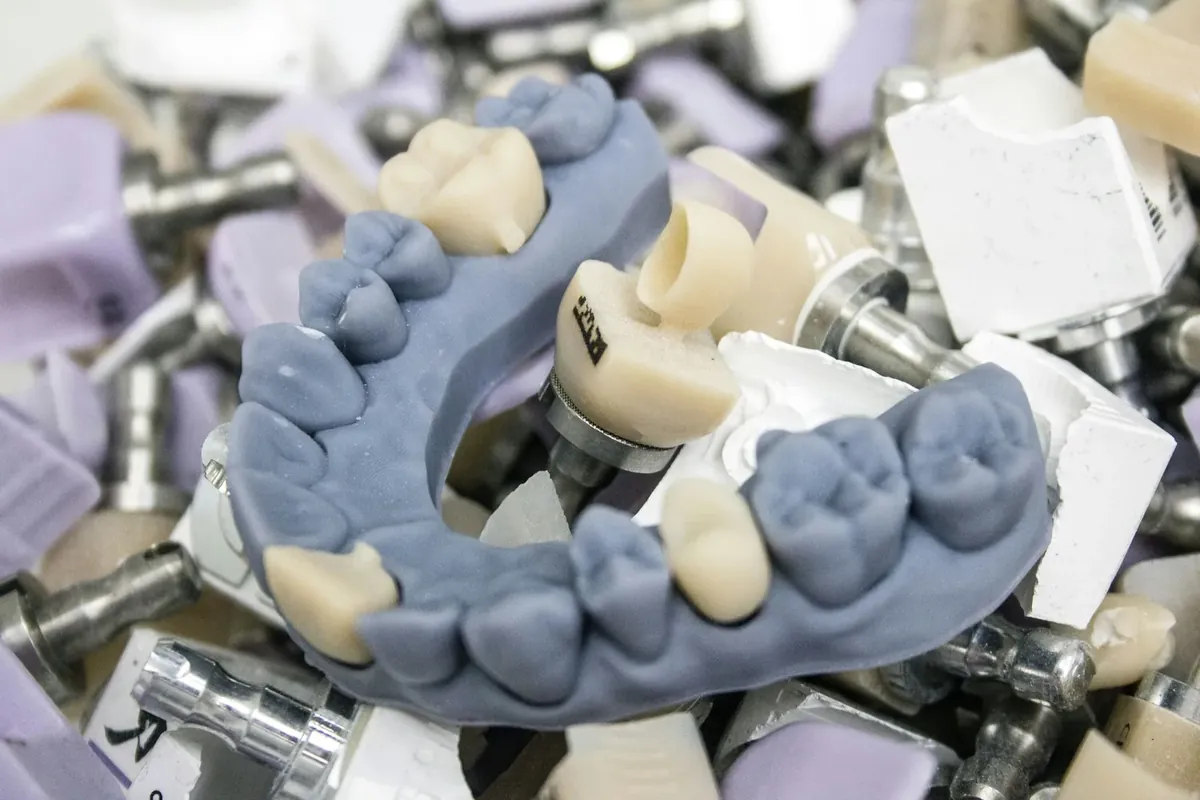
CAD/CAM means the crown is designed on a computer from a digital scan of your teeth and then milled from a block of material. Cleveland Clinic explains that a same-day version is made in the dental office from a solid ceramic block, and that it is not suitable for everyone. At our clinic, a CAD/CAM crown can be ready in as little as 1 day, and your dentist tells you after the examination whether it fits your tooth.
Side by side: the main crown materials
| Material | What it offers | Worth knowing |
|---|---|---|
| Zirconia | Tooth-colored and very durable | May look less translucent on a front tooth |
| All-ceramic (e.max, Empress) | No metal, close to the look of enamel | Suits visible teeth with a light bite |
| PFM (porcelain fused to metal) | Metal strength with a porcelain surface | Porcelain can chip, and a dark edge can show at the gum |
| Full metal or precious metal | Sturdy, rarely chips, needs little tooth removed | Metal color, so a good fit for hidden back teeth |
Which tooth, which material
Three things steer the choice: how much of the tooth shows when you smile, how hard you bite on it, and how much of your own tooth is left. The table below shows how that usually plays out. It is a general guide drawn from the sources at the end of the article, not a prescription, because your dentist also looks at your bite, the neighboring teeth and any habits you have.
| Tooth position | Materials usually considered | Why it fits |
|---|---|---|
| Front teeth that show | All-ceramic, or zirconia, sometimes PFM | Color and translucency matter, and the bite is lighter |
| Premolars, partly visible | Zirconia, all-ceramic or PFM | A balance between how it looks and how much force it takes |
| Molars with a heavy bite | Zirconia, PFM or metal | Strength comes first, and these materials stand up to heavier forces |
| Back molars that never show | Metal or precious metal, or zirconia | Sturdy, and little tooth is removed |
| A tooth in someone who grinds | Chosen with the bite in mind, plus a night guard | Extra force can chip or wear a crown |
Notice that zirconia appears in several rows. That is because it is both tooth-colored and strong, so dentists consider it on more than one kind of tooth. It does not mean it is the answer every time. A front tooth with a very thin edge, for example, may be better served by a more translucent ceramic.
Metal crowns: still a sound choice for the right tooth
People often search for crown metal as if it were an old-fashioned option. The sources do not treat it that way. Cleveland Clinic says metal crowns rarely chip or break, wear well and need only a thin layer of the tooth to be removed, and recommends them for molars out of sight. Leeds Teaching Hospitals NHS Trust also lists metal alloys for places where strength is needed and the tooth does not show in the smile.
There is also a research angle. In the Cochrane review of materials without metal, one trial compared full-contour zirconia single crowns with cast gold single crowns in 224 people. It found no clear difference in failures after one year, and some evidence in favor of gold after five years. The review rates all its evidence as very low in certainty, so this is a hint, not a verdict, but it shows why a gold or other precious-metal crown remains a sensible option for a back tooth that takes heavy force.
So when a metal crown is suggested for a back tooth, it is not a lesser choice. It is a choice that trades color for strength on a tooth where color rarely matters. If the idea of any metal in your mouth bothers you, say so, and your dentist will explain the alternatives.
A dark margin at the gum, and metal allergy
The dark edge on some PFM crowns
Many people have seen a crown with a thin dark edge near the gum. A review in the International Journal of Dentistry explains the idea behind it: a metal collar at the edge of a metal-ceramic crown reduces the light that passes into the neighboring tooth tissue, which can give the root surface and the gum a darkened look, and the authors note that an ideal look is not reached consistently with conventional metal-ceramic crowns. They also describe a way around it, a facial porcelain margin, which removes the metal collar.
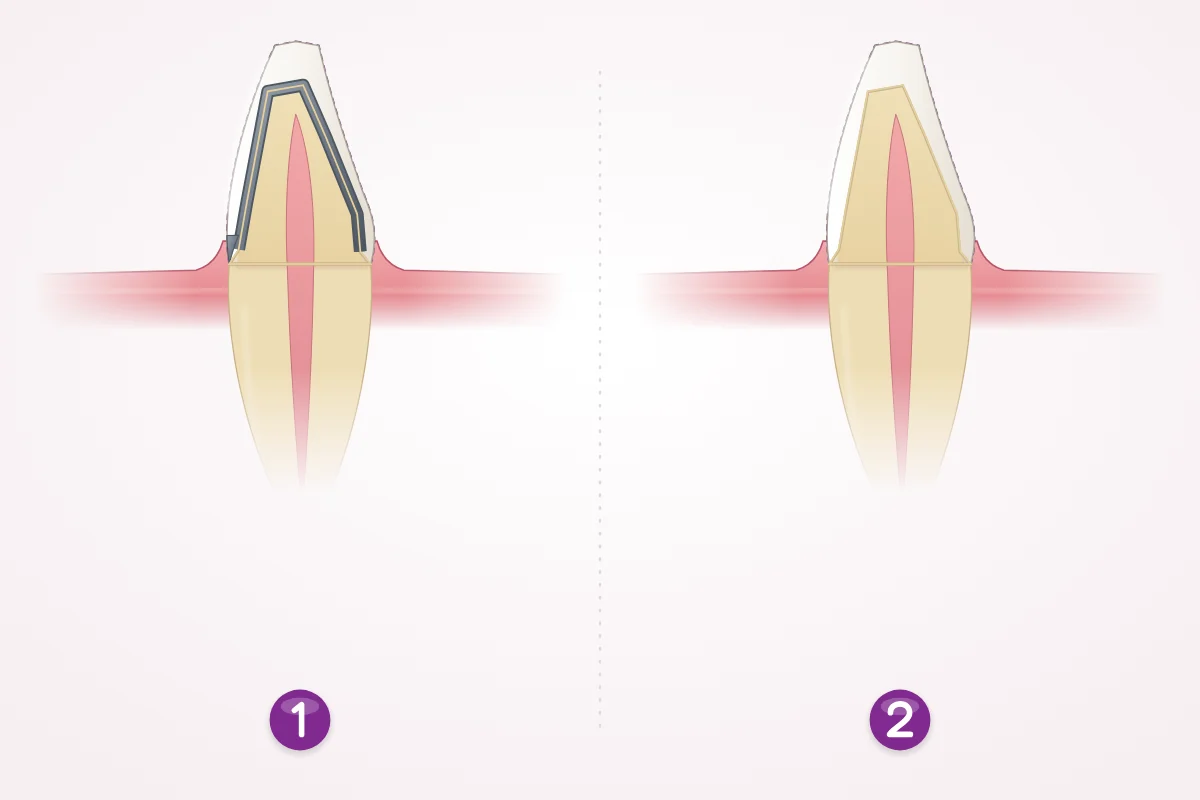
This matters most on front teeth. If you have a PFM crown that already shows a dark edge, it is worth a check, because a dark line at the margin can also come from other things, and the tooth under any crown can still develop a cavity, as MedlinePlus reminds readers. Your dentist can tell which it is and discuss options.
If you have reacted to metal before
Cleveland Clinic lists an allergic reaction to the crown material as a possible but rare risk, and says all-ceramic crowns are a good choice for people with metal allergies. MedlinePlus likewise says ceramic or porcelain crowns suit people with metal allergies. Tell your dentist about any reaction to jewelry, braces or earlier dental work before the material is chosen, and your dentist explains which metals a metal-based crown would contain.
A small study in the journal Cureus followed 20 people with front-tooth crowns, 10 zirconia and 10 PFM, and reported lower plaque and gum scores around the zirconia crowns at six months. With so few people and such a short follow-up, treat it as an early finding, not proof that zirconia is gentler on gums in every mouth.
Grinding your teeth, and crowns
If you grind or clench, the crown has to take extra force. Cleveland Clinic advises asking your dentist about a custom mouth guard, and MedlinePlus says a crown may chip or crack with grinding and that a night guard may help. Leeds Teaching Hospitals NHS Trust lists clenching or grinding among the situations where a crown may not be suitable without further thought, which is a reason to tell your dentist early.
Materials also interact with the tooth biting against them. Two reviews of clinical studies looked at wear on the opposing natural enamel and did not give a simple ranking. A 2019 review of monolithic zirconia on back teeth found the wear was similar to or more than natural teeth, but less than metal-ceramic. A 2024 network meta-analysis of trials up to 24 months found lithium disilicate wore the opposing tooth about as little as natural enamel, while zirconia and metal-ceramic wore it more. Cleveland Clinic, by contrast, describes zirconia as gentle on opposing teeth. The sources do not agree, and the authors of both reviews call for more and longer trials, so this is something to raise with your dentist.
For anyone who grinds, the practical plan is simple. Tell your dentist, who explains which material is planned for your bite, and wear a night guard after the crown is fitted. At our clinic in Chiang Mai, a night guard is recommended for people who grind their teeth.
Teeth grinding and night guards
Crown after a root canal
A tooth that has had root canal treatment has usually lost a lot of its structure, first to decay or a crack and then to the treatment itself. The Naresuan lecture explains that the tooth left after root canal treatment can be very thin, so a crown is advised to let it work as before. Cleveland Clinic includes root canal teeth among the teeth that crowns protect.
A full crown is not the only way to protect such a tooth. A 2024 systematic review from Edinburgh compared full crowns with onlays that cover the cusps on root canal teeth at the back of the mouth, and concluded that onlays looked favorable in the short to medium term, with very few studies available. The point is not that one is always right, but that the dentist weighs how much tooth is left, which tooth it is and how you bite. If a post is needed first, a visit is added.
Root canal treatment in Chiang Mai
Root canal treatment: how many visits, and do you need a crown?
How a crown is made, step by step
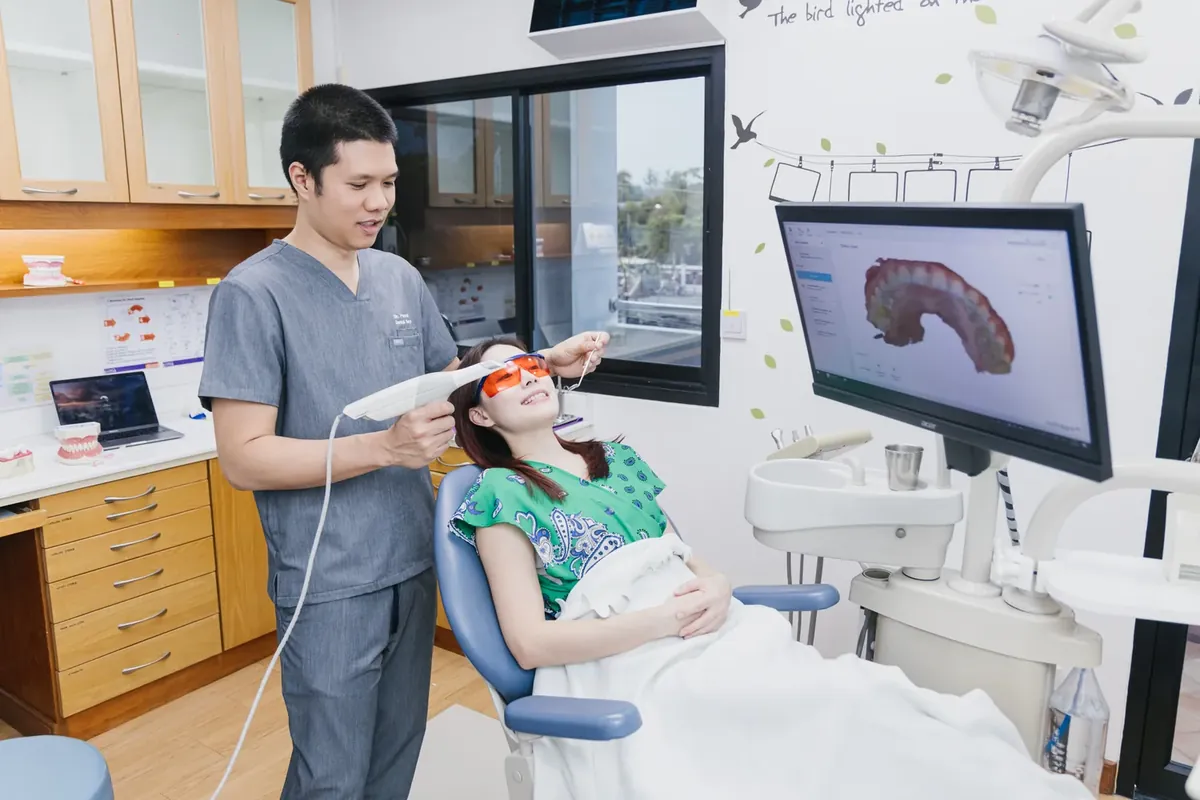
Cleveland Clinic and MedlinePlus both describe two visits as the usual pattern: one to prepare the tooth, one to fit the crown. At our clinic it looks like this.
- Examination and X-ray. Your dentist checks the tooth and its root on an X-ray first. If decay or infection has reached the pulp, root canal treatment may be needed before the crown.
- First visit: preparing the tooth. The dentist shapes the tooth, takes a digital scan or an impression, chooses the shade with you and fits a temporary crown.
- While the crown is made. The time depends on the crown type, the dentist treating you and public holidays. It can be as little as 1 day, and usually the crown is fitted 3 to 7 days after the tooth is prepared.
- Second visit: fitting. The dentist removes the temporary crown, tries the new crown to check fit, shade and bite, adjusts it if needed and then cements it in place.
If the tooth needs root canal treatment or a post first, extra visits are added, and your dentist tells you the plan after the examination. If you are traveling from elsewhere, say so when you book, so the visits can be lined up with your dates.
Does a crown hurt?
MedlinePlus describes the dentist numbing the area before the tooth is shaped, and Cleveland Clinic says that pain that keeps you awake at night is not expected afterward. You may feel pressure and vibration during treatment, and some sensitivity to hot and cold or soreness of the gum for a short time afterward. If you feel anxious about dental work, tell the team. Our clinic offers inhaled and oral sedation to help you relax.
The temporary crown and the first days
The temporary crown is usually made of resin or acrylic, and it keeps the prepared tooth covered and comfortable while the permanent crown is made. Cleveland Clinic advises avoiding ice, very hard nuts, popcorn kernels and sticky foods such as taffy and caramel, since they can pull off or damage a temporary or a permanent crown. MedlinePlus adds that you should chew on the other side and slide the floss out sideways rather than pulling it up.
If the temporary crown comes off, or the permanent one feels loose, contact the clinic soon, and keep the crown safe. Cleveland Clinic lists a loose crown, a bad taste or smell, a crack or chip, and a sharp edge on the tongue or gum as reasons to call your dentist.
Looking after the crown for the long run
- Brush twice a day with fluoride toothpaste and clean between the teeth daily, as Cleveland Clinic and Leeds Teaching Hospitals NHS Trust advise.
- Remember that the tooth under the crown can still decay, as MedlinePlus says, so keep the edge near the gum clean.
- Avoid biting ice, hard candy and other very hard things. Cleveland Clinic suggests avoiding extremely hard, crunchy and chewy foods.
- Keep your regular check-ups and cleanings. Our clinic can check the edge of the crown at the same visit.
- If you grind your teeth, wear the night guard your dentist makes for you.
What happens at the clinic
- Materials: zirconia, all-ceramic (IPS e.max, Empress), porcelain fused to metal, full metal and precious-metal crowns are available, and your dentist explains the options for your tooth.
- Digital scan: the dentist can scan your teeth with an intraoral scanner, and a CAD/CAM crown can be ready in as little as 1 day.
- Laboratory: crowns are made by our ISO-certified partner laboratory or with digital CAD/CAM.
- Dentists: crowns are planned and fitted by our dentists, including dentists who studied further in prosthodontics, the field that covers crowns, bridges and dentures.
- Warranty: crowns carry a 1-year warranty, terms apply. It is used at our clinic in Chiang Mai.
- Costs: the price depends on the material and is listed per tooth on the prices page. X-rays, medicines, root canal treatment and posts are charged separately, only if your tooth needs them, and your dentist confirms the cost after the examination.
- A crown from another dentist has come off: bring it with you. Your dentist checks the crown and the tooth, then cements it back or makes a new one, depending on their condition.
Crowns also anchor bridges, which are several crowns joined together to replace a missing tooth. If you are weighing a bridge against an implant, the article linked below compares them.
Dental bridge or implant: which suits one missing tooth?
A checklist to take to your dentist
Your dentist has examined your tooth. These questions help you understand the plan and choose with confidence. You do not need to ask all of them.
- Why does this tooth need a crown rather than a filling, inlay or onlay?
- Which materials could suit this tooth, and how do they differ in my situation?
- How much of my tooth will be shaped for this material?
- Will the color match my other teeth, and can I see the shade before it is cemented?
- I grind my teeth. Does that change the material, and do I need a night guard?
- Does this crown contain metal, and which metals, since I have had a reaction before?
- Will the edge near the gum be visible later if my gum moves back?
- How many visits will it take, and what happens with the temporary crown?
- Is root canal treatment or a post needed first, and does that add visits or cost?
- What does the warranty cover, and how should I look after the crown?
Common myths and the facts
| Myth | Fact |
|---|---|
| Zirconia is better than every other crown. | The Cochrane review found insufficient evidence that crowns without metal beat metal-based ones, and said the choice should rest on the dentist’s experience and your circumstances. |
| A metal crown is old-fashioned. | Cleveland Clinic says metal crowns rarely chip or break, and suit molars that stay out of sight. |
| A tooth-colored crown is as strong as metal. | Leeds Teaching Hospitals NHS Trust suggests all-ceramic crowns where the bite is not heavy, and metal where strength is needed. Zirconia is the tooth-colored option made for more force. |
| A crowned tooth can never decay. | MedlinePlus reminds readers that the tooth under the crown can still get a cavity, so cleaning around the edge still matters. |
| If you grind your teeth, you cannot have a crown. | Not a ban, but a reason to plan. Tell your dentist, who explains the material for your bite, and wear a night guard. |
| Every root canal tooth must have a full crown. | Crowns are usually advised when little tooth is left, but a review of back teeth found onlays favorable in the short to medium term, so your dentist weighs each tooth. |
| A slightly loose crown is nothing to worry about. | Cleveland Clinic lists a loose crown as a reason to call your dentist, so contact the clinic soon. |
If this sounds like you: what to do
These are example situations, not patient stories, to help you find the next step that fits.
- A lower back molar has had a root canal and little tooth is left: ask whether a crown or an onlay is planned, which material suits a heavy bite, and whether a post is needed first.
- An upper front tooth is broken and you want it to look natural: ask about all-ceramic or zirconia, and ask to see the shade with you before it is cemented.
- A back molar never shows when you smile and you want a sturdy crown: a metal or precious-metal crown is a sound option to discuss.
- You grind your teeth at night and need crowns on two molars: tell your dentist, who explains which material is planned for your bite, and plan to wear a night guard.
- You have had a rash from metal jewelry: say so before the material is chosen, and ask about all-ceramic or zirconia.
- An older PFM crown on a front tooth now shows a dark edge at the gum: have it checked, and ask whether replacing it with a crown without metal is worth considering.
- A crown made elsewhere has come off while you are in Chiang Mai: keep the crown, bring it in, and the dentist checks whether it can be cemented back or needs to be remade.
Frequently asked questions about crown materials
Which crown should I choose?
There is no single answer, because the right crown depends on the tooth, the bite and your habits. As a rough guide, zirconia and metal are often considered for back teeth that take heavy force, all-ceramic for visible teeth with a lighter bite, and PFM as a middle option with a metal core. The Cochrane review found too little evidence to rank them, so your dentist chooses with you after examining the tooth.
What is the difference between zirconia and e.max?
Both are tooth-colored ceramics with no metal. Cleveland Clinic calls zirconia extremely durable under heavier forces, while a Thai dental school lecture says it can be less translucent. e.max is one of the all-ceramic types that imitate enamel more closely, which is why it is often considered for visible teeth. Which one suits you depends on how much of the tooth is left and how you bite.
Are metal crowns still used?
Yes. Cleveland Clinic and Leeds Teaching Hospitals NHS Trust both describe metal crowns as a sound choice where strength is needed and the tooth does not show when you smile. Our clinic offers full metal and precious-metal crowns, with the laboratory fee for the metal charged separately.
Why do some crowns have a dark line at the gum?
A review in the International Journal of Dentistry explains that the metal collar at the edge of a metal-ceramic crown reduces light entering the neighboring tooth tissue and can darken the look of the root and gum. A porcelain margin or a crown without metal avoids it. If you see a dark line, have it checked, because other causes are possible.
Which crown is suitable if I am allergic to metal?
Cleveland Clinic and MedlinePlus both say all-ceramic crowns, which include zirconia, suit people with metal allergies. Tell your dentist about any past reaction before the material is chosen, and your dentist explains which metals a metal-based crown would contain.
Which crown if I grind my teeth?
There is no single rule, and the sources disagree on how some materials wear the opposing teeth. What they agree on is to tell your dentist about the grinding, let your dentist explain which material is planned for your bite and wear a custom night guard. Our clinic recommends a night guard for people who grind.
How many visits does a crown take?
Usually two: one to shape the tooth, take a scan or impression, choose the shade and fit a temporary crown, and one to fit the permanent crown. It can be as little as 1 day with CAD/CAM, and usually the crown is fitted 3 to 7 days after the tooth is prepared. Root canal treatment or a post first adds visits.
What if a crown comes off?
Keep the crown somewhere safe and contact the clinic soon. Your dentist checks the crown and the tooth, then cements it back or makes a new one, depending on their condition. This applies to crowns made elsewhere too.
What is the difference between a crown and a veneer?
A veneer covers only the front of the tooth, while a crown covers the whole visible tooth. Veneers suit teeth that are mostly healthy, and crowns suit teeth that are broken, heavily filled or weakened. Your dentist examines the tooth to say which fits.
Does every root canal tooth need a crown?
Not always. A crown is often advised when little tooth is left, and a review of back teeth found onlays favorable in the short to medium term, with few studies. Your dentist decides tooth by tooth, based on how much tooth remains and how you bite.
Can I go back to work after getting a crown?
Cleveland Clinic says most people return to work, school and routine activities right away, and that sensitivity to heat and cold for a couple of weeks is normal. MedlinePlus mentions an adjustment period with the new crown. If something feels high or sore, contact the clinic.
Summary
Crown material is chosen by the tooth, the bite and your habits, not by one winner. Tell your dentist about grinding, past metal reactions and any root canal, and use the checklist above.
- Zirconia is strong and tooth-colored, all-ceramic suits visible teeth with a light bite, PFM has a metal core, and metal crowns suit hidden back teeth.
- Sources disagree on how some materials wear the opposing teeth, so ask about it if you grind.
- A dark edge at the gum on a PFM crown comes from the metal collar. Crowns without metal avoid it, and a dark edge is worth a check.
- Tell your dentist about any past reaction to metal. All-ceramic crowns suit people with metal allergies.
- A crown usually takes two visits, with a temporary crown in between. Look after the edge near the gum, because the tooth underneath can still decay.
- Crowns carry a 1-year warranty, terms apply, and the price depends on the material.
References
Cleveland Clinic: Dental Crowns, types, procedure and care
MedlinePlus (US National Library of Medicine): Dental crowns
Leeds Teaching Hospitals NHS Trust (UK): Crowns, patient information
American Dental Association (MouthHealthy): Crowns
Faculty of Dentistry, Naresuan University: radio script on dental crowns (Thai)