
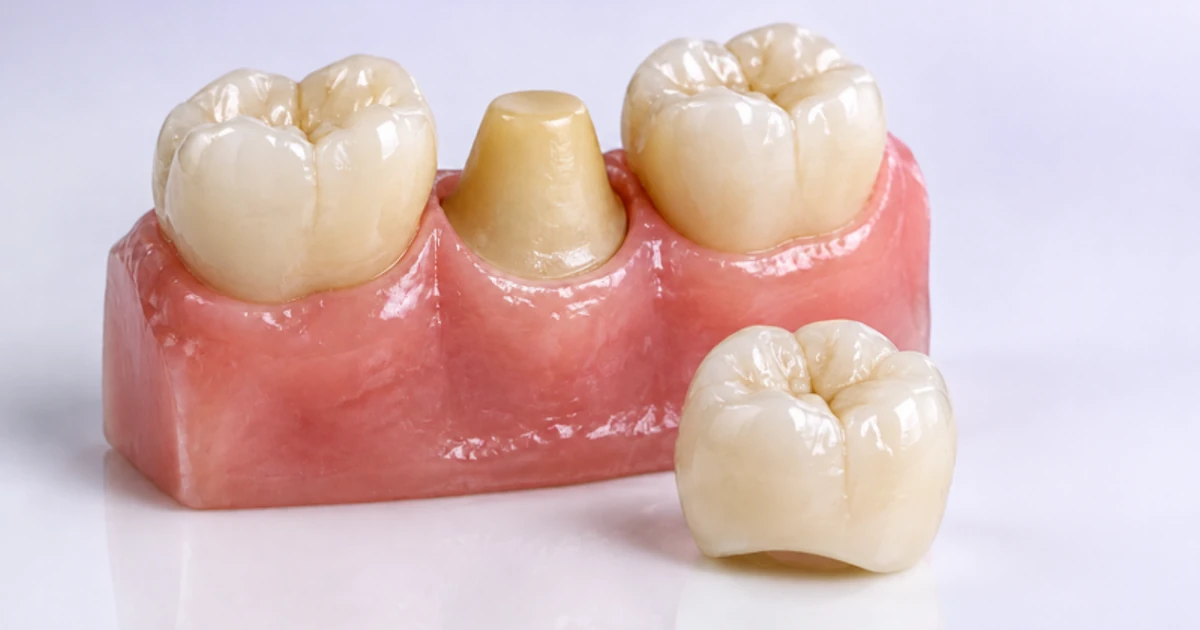
You’re eating, and suddenly there’s something hard and loose on your tongue. Or you floss and the crown comes out with it. Some people find a thin veneer has come off a front tooth while biting into an apple. All the questions come at once: Is the tooth underneath broken? Will it hurt tonight? Did I swallow it?
The good news is that a crown or veneer coming off is usually not an emergency, and often the same piece can be cleaned and bonded back on if the tooth underneath is still healthy. What helps most is what you do in the first few hours: keep the piece safe, and don’t glue it back yourself.
Quick summary
- Keep the crown or veneer in a small, hard container, don’t glue it back yourself, and chew on the other side for now
- See a dentist within a few days, or sooner if there’s pain, swelling, a broken tooth, or it’s a front tooth and you have an important event coming up
- Whether it can go back on depends mainly on the tooth underneath. If there’s decay, a crack, or the piece no longer fits, your dentist will plan a new one
- If you choke on it, have trouble breathing, or swelling spreads to your neck, go to a hospital right away
Crown or veneer fell off: how urgent is it?
Go to a hospital right away if you think the piece has gone into your airway: you can’t stop coughing, you’re wheezing, or you have trouble breathing. Go right away too if swelling spreads to your eye, neck or under your tongue.
See a doctor the same day if you swallowed the piece and now have chest pain, stomach pain or vomiting; if your gum or face is swollen or you have a fever; or if it came off after a fall or a blow to the face.
See a dentist within 1-2 days if the tooth hurts, a sharp edge is cutting your tongue, the piece is broken, it’s a temporary crown or a crown on an implant, or it has come off the same tooth before. If it’s a front tooth and you have an important event coming up, mention it when you book.
Booking within a few days is fine if the piece came off whole and you still have it, the tooth underneath feels smooth with only slight sensitivity, and there’s no pain or swelling. Most people fall into this group.
If you’re not sure, send the clinic a photo first, or read more at Emergency dentist in Chiang Mai.
Emergency dentist in Chiang Mai
What to do first
- Take the piece out of your mouth so you don’t swallow it.
- Close the sink drain before rinsing. Small, thin pieces slip down it very easily.
- Rinse it gently under running water. Don’t scrub the inside or pick off the old cement.
- Put it in a small, hard container with a lid. Don’t wrap it in tissue, because it’s easy to throw away by mistake.
- Rinse your mouth with warm water, check the tooth in a mirror for sharp edges or swelling, and take photos of the tooth and the piece, inside and out.
- Contact the clinic. Tell us which tooth it is, whether it hurts, and whether the piece is whole.
Don’t use superglue or household glue. It isn’t made for use in the mouth, it can set in the wrong position, and it can damage both the tooth and the crown. Don’t press the piece back on and bite down to hold it, and don’t file down a sharp edge yourself. Cover it with dental wax or sugarless gum until your visit.
Why crowns and veneers come off
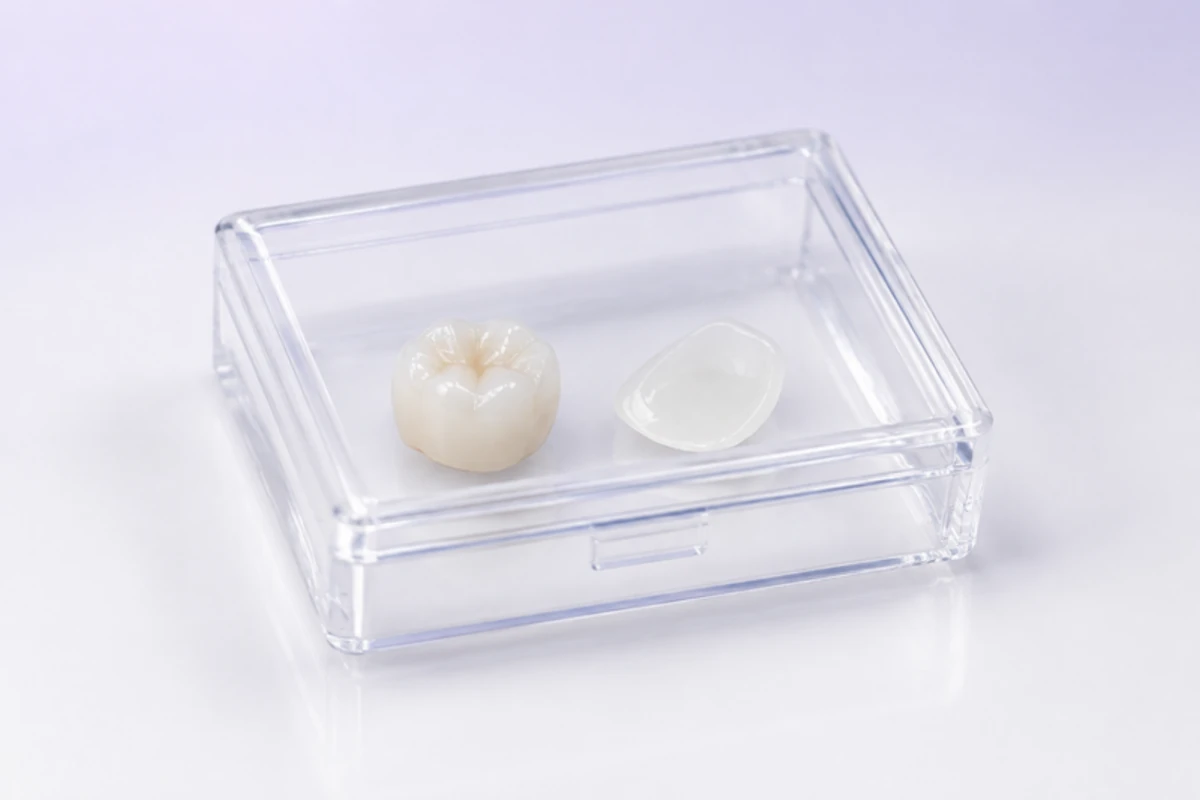
A crown stays on thanks to the shape of the prepared tooth underneath and a thin layer of cement. If either weakens, the crown loosens. Crowns do come off sometimes, and it doesn’t mean the crown was badly made. Your dentist will look for the reason, because that shows whether it can simply go back on.
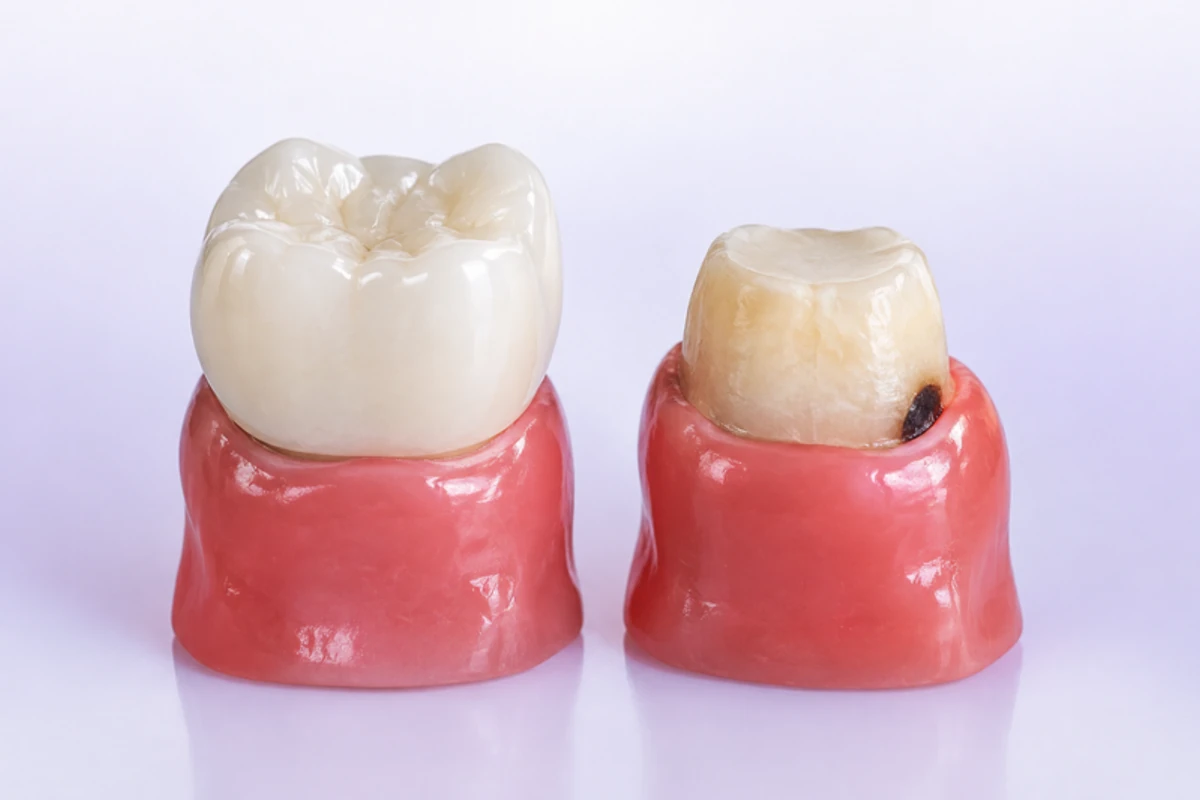
The most common cause is decay at the edge of the crown, which makes the tooth under the crown soft and dark. The next most common is cement breaking down over time: the crown and tooth look normal, but the crown slips on and off easily. Other causes include sticky or hard food, a broken tooth under the crown, teeth grinding, and a short or tapered tooth that gives the crown little to grip. A tooth that has had root canal treatment is more brittle than usual, so if its crown comes off, get it crowned again soon. See Root canal treatment in Chiang Mai.
Root canal treatment in Chiang Mai
A veneer is bonded to the front of the tooth with resin cement and doesn’t cover the whole tooth like a crown. It comes off for similar reasons: worn cement, heavy clenching or grinding, biting hard things or opening things with your front teeth, decay at the edge or under the veneer, and knocks to the tooth. A veneer bonds well to enamel, but less well to exposed dentin (the layer under the enamel) or an old filling. The American Dental Association (ADA) notes that veneers can chip, crack or come loose over time, and may not suit people who clench or grind their teeth.
Crown fell off: put it back or make a new one?
It depends more on the tooth than on the crown. Even a perfect crown can’t go back onto a tooth with decay or a break underneath, and a crown that no longer fits will just come off again.
The tooth is healthy and the crown is whole and still fits. The dentist cleans the tooth and the crown, checks your bite, and cements the same crown back on.
There’s decay at the edge, or the crown no longer fits. The dentist removes the decay and builds the tooth back up, then either recements the old crown or makes a new one. Cementing a crown over decay lets the decay keep spreading underneath. If the crown is cracked or worn through, a new one is made, with a temporary crown to protect the tooth in the meantime.
The tooth has broken. If the root is still strong, the dentist may do root canal treatment, place a post and core, and make a new crown. If the break goes deep under the gum, the dentist will explain options for replacing the tooth, such as Dental implants in Chiang Mai or a bridge.
The dentist needs to examine the tooth, and often take an X-ray, to tell which of these applies to you. If the tooth is still alive and very sensitive, local anesthetic (a numbing injection) can be used.
Veneer fell off: what to do
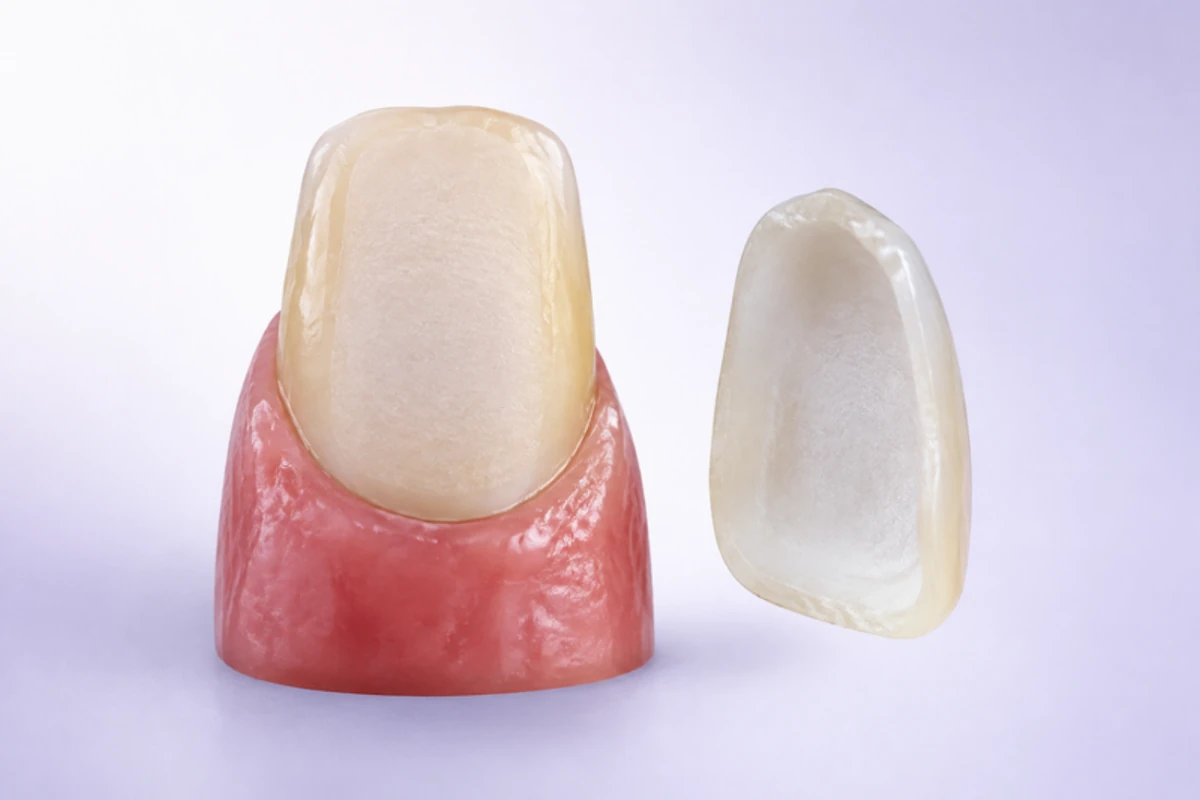
A veneer is a thin ceramic shell bonded to the front of a tooth. When it comes off, you see the prepared front of the tooth, which may look different from before and feel sensitive. Because it’s a front tooth, it tends to affect your confidence more than losing a back crown.
The first steps are the same as for a crown. A thin veneer is even easier to lose down the drain, so close the drain first, and don’t scrape the inside surface that was bonded to the tooth.
It can be bonded back on in many cases if the veneer is whole, not cracked, still fits, and the tooth underneath has no decay. The dentist cleans the veneer and the tooth, then bonds it back on.
It needs remaking if the veneer is broken, badly chipped or no longer fits closely, because a veneer that doesn’t fit snugly tends to come off again. If there’s decay, that has to be removed first. If the tooth underneath is broken or badly damaged, the dentist will explain other options, such as Dental crowns in Chiang Mai.
It has come off the same tooth more than once. The cause should be found before it’s bonded again, for example your bite, clenching, or the surface behind the veneer. If clenching may be the cause, a night guard may be suggested to protect it.
A new veneer takes about 10-14 days. If you’re traveling from elsewhere, send photos and your travel dates first, so your visits can be planned around your stay. See How long veneers take and the price page, cosmetic section.
the price page, cosmetic section
If you’d like to replace an old veneer because the color no longer matches or the edge has started to show, a laser can help remove veneers and crowns, but the old bonding layer still has to be polished off and the tooth smoothed. Read more at Removing Veneers and Old Crowns: When a Laser Can Help.
Removing Veneers and Old Crowns: When a Laser Can Help
Until your appointment
A tooth without its crown or veneer can be sensitive, but with good care it can wait a few days. Chew on the other side, choose soft foods, and avoid very hot, very cold and sticky foods. If it’s a front tooth, don’t bite with it. Brush the tooth gently twice a day with fluoride toothpaste. If it’s sensitive, dabbing a little sensitive-teeth toothpaste on it with a clean finger can help. On the day of your visit, bring the piece, your photos, a list of your medicines and any old X-rays of that tooth.
If you’re traveling, keep the piece in a hard box in your carry-on bag. If you’re visiting Chiang Mai, you can ask for an itemized receipt and a medical certificate in English for your travel insurance claim. See Planning dental treatment from abroad.
Planning dental treatment from abroad
What we do at the clinic
At Kitcha Dental Clinic, a crown or veneer that has come off is treated as urgent. Call us, or send photos by WhatsApp, LINE or email. Our team will find a time with a suitable dentist based on your symptoms, on the same day if possible. The dentist examines the tooth, the piece and your bite, takes an X-ray if needed, explains whether it can go back on, and tells you the cost before starting. See the price page, fillings, inlays and crowns.
the price page, fillings, inlays and crowns
If you need a new crown, the dentist prepares the tooth, takes a scan or an impression, chooses the shade with you, and fits a temporary crown to protect the tooth. It can take as little as 1 day, and the new crown is usually fitted 3-7 days after the tooth is prepared. Crowns made at the clinic come with a 1-year warranty, subject to terms.
If your crown or veneer was made at another clinic or abroad and has come off, you don’t need to go back to the original clinic. We can look after it. Bring the piece even if it looks damaged, and any old X-rays if you have them. If the original clinic’s warranty still applies and it’s easy to go back, it’s worth asking them too.
Stopping it from happening again
- Brush twice a day with fluoride toothpaste, paying attention to where the crown or veneer meets the gum, and clean between your teeth every day.
- Be careful with toffee, sticky sweets and chewing gum. Don’t chew ice or use your teeth to open things.
- If you grind your teeth at night, ask about a night guard. See Teeth grinding and night guards.
- Keep up with check-ups and cleanings. If you have an implant, we recommend a cleaning every 6 months and an implant check once a year.
- If the piece starts to feel loose, you notice an odd taste, or floss catches at its edge, have it checked before it comes off. See the Care guide for crowns and bridges.
Teeth grinding and night guards
Care guide for crowns and bridges
Crown fell off or veneer fell off: frequently asked questions
Can I glue it back on myself?
We don’t recommend it. Household glue can fix the piece in the wrong position, and removing it later can damage the tooth or the piece. Keep it in a box and let your dentist bond it after checking the tooth.
I swallowed my crown. What should I do?
Most swallowed objects pass through the digestive system on their own. Don’t try to make yourself vomit, and let your dentist know. If you have chest pain, pain when swallowing, or stomach pain, see a doctor. If you coughed or wheezed when the piece went missing, go to a hospital right away.
My crown fell off. How long can I wait?
A few days is usually fine if you keep the area clean. If you leave it for a week or more, the uncovered tooth can decay, chip, become more sensitive, or shift so the old crown no longer fits.
The crown on my implant is loose or came off. Is the implant damaged?
Not necessarily. A crown on an implant is held by a small screw, by cement, or both, and either can loosen. Have it checked soon. The dentist will tighten it, bond it back on, or plan a repair.
My veneer fell off. Can it be put back on?
In many cases, yes, if the veneer is whole, not cracked, still fits, and the tooth underneath has no decay. If it’s broken or there’s decay, it usually needs remaking. If it keeps coming off the same tooth and you think you might clench, tell your dentist.
Summary
- Most crowns and veneers that come off are urgent but not an emergency, and the same piece can often go back on after the tooth is checked.
- Whether it can go back on depends mainly on the tooth underneath. Decay, cracks and fit decide it.
- If you have trouble breathing, chest or stomach pain after swallowing it, or swelling spreading to your neck, go to a hospital right away.
If you would like the dentist to check the tooth and explain whether it goes back on or needs remaking, you can book an appointment at Kitcha Dental Clinic, call +66 53 200 201, message us on LINE @kitchaclinic or WhatsApp +66 91 797 7888. For more about the service, see Dental crowns in Chiang Mai.
The clinic is open every day, 09:00-20:00, except 31 December, 1 January and 13-15 April. Walk-ins are welcome, but the dentists see patients with appointments first, so you may have to wait a while. Booking ahead gives you a fixed time.
Sources for this article
- NHS 111 Wales (UK): what to do when a filling or crown comes out
- American Dental Association (ADA, MouthHealthy): information on dental emergencies, crowns and veneers
- Cleveland Clinic and MedlinePlus: patient information on dental crowns
- Published reviews on crown, implant crown and ceramic veneer loss and complications
- The clinic’s own experience, and the Dental crowns in Chiang Mai page